Introduction

In the 1960’s, my grandmother, Vincenza, had returned to Boston’s North End, the neighborhood where she had first arrived in America. She had come full circle, having arrived in the North End in 1914 to find a filthy, overcrowded slum, to achieving the American Dream and owning a home in the suburbs to finally coming back to the place that felt comfortable and safe and reminded her of Italy as much as any American neighborhood could.
By this time, the North End had progressed from the run down slum it once had been to a tourist attraction for visitors to Boston. People came in droves to visit the small specialty shops along Salem Street, eat in the many restaurants that served regional dishes from all over Italy and to experience the sense of community that had grown and developed over the decades since Vincenza first arrived in Boston.
Walking up the four flights of old wooden stairs to my grandmother’s apartment, I could smell the food cooking from the apartments that lined both sides of the long hallways. The air would be filled with the mouth watering aromas of garlic frying in olive oil, peppers roasting and fresh bread being baked. My grandmother’s kitchen was always rich with the aroma of tomato sauce simmering on the stove, anise cookies baking in the oven and the light, sweet scent of ricotta mixed with eggs and parsley.
I spent hours in my grandmother’s kitchen watching her prepare meals; recipes and techniques passed down from her mother, Lucia; meals that she learned to prepare in an old stone kitchen over an open fire back in “the old Country”, Abruzzi. It seems that there was a story or some type of folk lore to go with every meal she prepared. I loved listening to the stories as much as I loved helping to prepare and eat the food.
The recipes I learned from my grandmother are the recipes of the peasant farmers, sheep herders and laborers of Abbruzzi. They are recipes developed out of necessity; the need to use every bit of food available and waste nothing; the need to find a way to fill your family and keep them nourished even when food and money were scarce. These are not gourmet recipes that use expensive, trendy ingredients. I am not a professional chef. Hopefully, you will enjoy the idea of making comfort food, plain family friendly meals, some of which go back centuries and have their roots in ancient Roman times. I learned that food was something to be fully experienced with all the senses. A meal was meant to be made from scratch, using the freshest ingredients possible. It was meant to be made with love and it was to be shared with family and friends, relished and savored. A full day could go into the preparation of a meal that would be served with pride and love to the family and friends gathered at the table. A meal was a social event; a time to sit around the table, talk, laugh and unwind.
The preparation of food was an art in itself. Food incorporated all the senses. One not only paid attention to taste, but also to the aromas, textures, appearance and sometimes even the sound of food. My grandmother never wrote down or read a recipe. All the knowledge of cooking was stored in her head. She learned to cook from instinct, using all her sense to determine what flavors would work together. I learned to cook the same way my grandmother and great grandmother did. Measurements consisted of a pinch, a bit and a handful.
I cannot begin to explain how difficult it is for me to write the recipes for this blog and for the upcoming cookbook. I learned to measure with a pinch, a handful, a little of this and a generous amount of that. Taste, sight and common sense told me whether or not the amount was right. In writing a cookbook, I had to prepare my grandmother’s and great grandmother’s dishes, trying to measure ingredients to make it easy for others to follow. I learned that this is easier said than done. Half way through the preparation, I realized that I was reverting to instinct and forgetting to measure. That’s what Italian cooking is. You learn to use all your senses to create a meal and you eventually know what flavors will complement one another.
Therefore, in reading these recipes and trying them out, you cannot take the measurements as absolute, but rather as guidelines for amounts. In some cases I have state that you should use a pinch or a bit of an ingredient. This will no doubt cause panic for some people who tend to worry too much about whether or not they are doing it right. These people are missing out on the joy of cooking and the opportunity to develop an intimate relationship to the food. I hope that anyone reading this will eventually try to let loose and have some fun cooking. Learn to trust your instincts, learn to uses all your senses in cooking, and learn to cook like an Italian.


Showing posts with label Italian soup. Show all posts

Monday, December 27, 2010

Escarole Soup


Escarole soup is what many know as "Italian Wedding Soup."  The term, wedding soup, originates from a misunderstanding of the soup’s name, ministra maritata, which literally translates to married soup. The name refers not to the occasion for which it is made but to the marriage of flavors that exist in this soup when it is prepared properly.

Much of we see at weddings is poor quality version of the soup. Canned versions area horrible abomination created by soup manufacturers who, not knowing how to properly make it or wanting to cut corners, have created some of the most awful tasting concoctions of spinach and tasteless meatballs.
After making this soup from scratch and tasting it, you will understand and likely feel that you could never touch a canned "Italian Wedding Soup" again.

This recipe does take a bit of prep time, but is well worth the effort. I'm sure you'll agree when you smell the mouth watering aromatic steam that wafts through the kitchen. The flavors are fresh, rich and blend together perfectly. You will notice the lack of herbs or spices in this version of the recipe. That is because it doesn't need any. 
Although some people use spinach in this soup, the traditional recipe calls for escarole. Escarole has a more delicate flavor than spinach and it tends to compliment the flavors of the other ingredients rather than compete with them.

Ingredients:

One head of escarole
Two skinless chicken breasts
One pound of baby carrots
One bunch of celery
One large yellow onion or two medium onions
One pound of ground beef (ground veal will make lighter, melt in the mouth meatballs)
A large can of good quality chicken broth (or homemade chicken broth if you are ambitious)
Seasoned breadcrumbs

Pour the chicken broth into a very large pot and bring to a boil. Reduce heat and let the broth simmer. Put the chicken breasts in and let them cook completely.

One thing to note, you can use any part of the chicken you like. I use the breast because I personally do not like any other part, but thighs and legs, even a whole chicken work as well.
While the chicken cooks, start preparing the vegetables. Wash the escarole thoroughly. Escarole can be very gritty and sandy deep in the leaves so you do need to wash it carefully. See some tips after the recipe on how to select and properly clean escarole.
Once the escarole is cleaned, gently tear the leave into small pieces and set aside. Cut the onion into bite sized pieces. Cut the celery into slices, you can also use any leafy ends that be left on the stalks. Place the celery and onions and carrots into the bowl with the escarole while you tend to the chicken.
Once the chicken is completely cooked, remove it from the pot, set it aside on a plate and let it cool while you prepare the meatballs.
Mix together the ground beef and breadcrumbs in a large bowl. Add water to the mix as needed to keep the mixture moist enough to roll into balls and firm enough to hold together. Taking small bits of the ground beef, roll into bite sized meatballs. One pound of ground beef mixed with breadcrumbs will make approximately one hundred meatballs. This is enough for two large pots of soup.
After the meatballs are made, check the chicken for temperature. If the chicken if cool enough to handle, begin shredding it. I like to shred it by hand into small spoon sized bits. 
When you are done with the chicken, put the vegetables and chicken in the pot and gently drop the meatballs in on top of those. Note that the meatballs are not fried prior to being added to the soup. This allows to gently simmer and cook in the soup, soaking up the various flavors and the broth. The result is an extremely tender and juicy meatball. Let the soup simmer uncovered for about two hours to allow the meatballs to cook and for the various flavors to blend.
Tips on choosing and cleaning escarole:

Choosing escarole is much like choosing any other green leafy vegetable. You want to look for crisp leaves, rich dark green color and a well formed bunch with leaves tight around the stem and spreading out slightly from the center outward. Because the leaves are rather delicate, it is not unusual to see some bruising around on the outer portions . Especially the lower portion close to the stem area and the top edges of the larger, outer leaves. these pieces can be torn off and discarded. What you do not want to see is extensive bruising or discoloration, softness around the lower outside leaves near the stem.
The way best to clean escarole for cooking is to break off the leaves from the stem and place them into a large bowl full of cold water. Move them around for a few minutes to loosen any grit from the base of the leaves. The grit and soil will sink to the bottom of the bowl.
Remove the leaves using your hands, so as to leave the grit and soil undisturbed at the bottom of the bowl. Place the escarole into a colander and rinse with cold water. Empty and rinse the bowl, fill once again with cold water and repeat the process one more time.

Monday, September 20, 2010

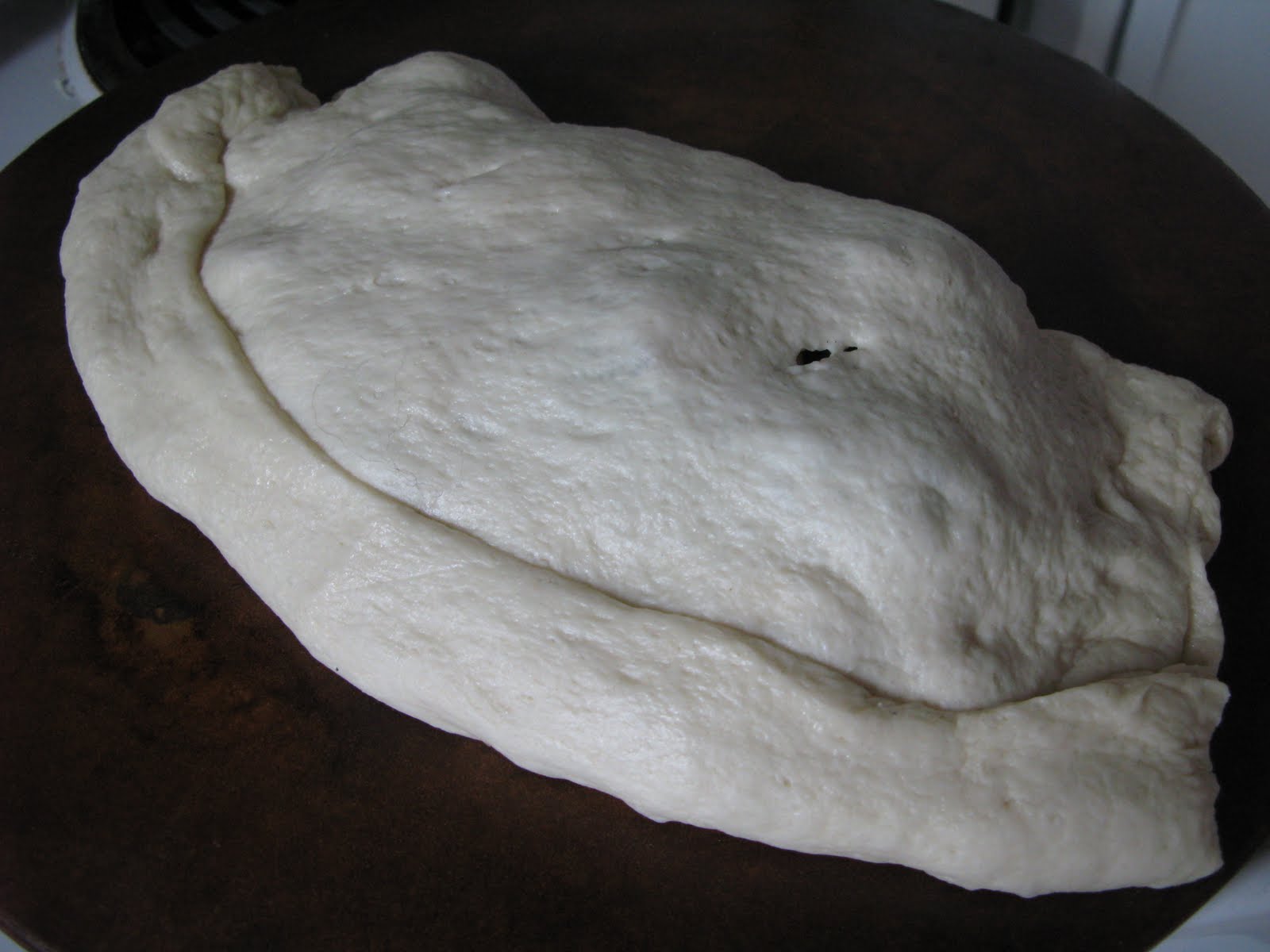
Pizza di Scarola


This is something my grandmother made frequently and would keep on hand in the freezer because it was always a favorite. It can be made with escarole or, if you prefer, spinach works just as well.  It was one of the sneaky ways my grandmother had of getting me to eat the nutritious foods that children normally avoid. Presenting it the form of a calzone or pizza could make leafy greens very appealing.

Ingredients:
6-8 ounces of uncooked, fresh spinach
1/3 cup parmesan cheese
1/3 cup mozzarella cheese, shredded
1/2 cup sliced white mushrooms
1/2 cup sliced onion
1/3 cup extra virgin olive oil

Saute the onion until it becomes tender and translucent. Just a few minutes before that point, add the mushrooms to the pan and saute until they start to turn a golden color. 


Spread the dough out onto a pizza stone or aluminum foil that has been oiled with cooking spray and covered with a dusting of flour or cornmeal.

Spread the spinach over half dough leaving a quarter of an inch at the edge.


Sprinkle on the mozzarella and parmesan.

Spoon the mushrooms and onion over the spinach.
 
Take the other half of the dough and fold it over the spinach and mushroom mixture to form a half moon shaped pie.

Go around the edges pressing the dough together to form a seal. Place a few small slices in the top to vent steam.


Bake at 325 degrees until the dough has turned a deep golden brown.


Allow to set 5-10 minutes before slicing.


This is delicious hot or cold. It can also be served with a bit of tomato sauce spread over the top.

Sausage Soup


This is another hearty, filling soup that goes along way. Again, this is a recipe I have simplified from the way my grandmother made it and certainly from the way my great grandmother would have. My grandmother, Vincenza, bought dried beans and soaked them for 24 hours them simmered the for half a day. My great grandmother Lucia, picked the beans from the garden.
It can be made with either sweet or hot Italian sausage. Although I love hot, spicy foods, I prefer this soup with the sweet sausage. It tends to blend better with the other flavors rather than trying to compete with them.

Ingredients:

1 pound Italian sausage
2 clove garlic, minced
2 cans beef broth (14 ounces)
1 can crushed tomatoes (14 ounces)
1 cup sliced carrots
1 can of great northern beans or cannellini beans, undrained
2 small zucchini, cubed
1 medium onion sliced
Directions
Brown the sausage and saute the garlic and onion with it. Do not brown the garlic and onion, just cook until the onion is soft and translucent.
Slice the sausage into 1/4 inch slices.
In a large soup pot mix together the broth and tomatoes. heat on high until the liquid gets just about to the boiling point. Reduce heat and add the sausage, carrots, onions and garlic.
Allow this simmer 15-20 minutes.
Add the zucchini and beans along with liquid from the can.
Continue to simmer, on low heat, for another 20 minutes until sausage is completely cooked and the vegetables are tender.

Add salt and pepper to taste.

Tuesday, September 14, 2010

Veal Stew (Stufato del Vitello)

This was a favorite of mine as a child. My grandmother made this frequently and served it with large chunks of crusty, rustic bread for sopping up the soup at the end.

This is a light, savory stew that is perfect for a cold day. It can be made in a hour or can be left to simmer longer than that. Once this starts to simmer, your whole kitchen will fill with a rich aroma that will draw the family (and possibly some neighbors) to the kitchen.

My grandmother and great grandmother would buy fresh peas still in the pod and spend hours shucking them. In this version, frozen peas will suffice. If you plan to use canned peas, not only will you end up with that aluminum taste overpowering the stew and ruining it, you will also end up with peas that are pretty much pureed.

Sorry, I think canned vegetables are the work of the devil. Fresh is, of course, always the first preference. Frozen is second.

Ingredients:

1 pound of stewing veal
2 white potatoes cut into chunks
1 large onion sliced
2 cloves of garlic crushed
3 cups of water
1 cup of crushed canned tomatoes
1 teaspoon of parsley
1/2 cup of diced sun dried tomatoes
1 box of frozen peas
1/3 cup cooking oil

Heat the oil in a good sized skillet. Once the oil is hot (it will start to pop and sizzle) place the onion, garlic and veal into the skillet and cook until the meat has browned and the onion and garlic has become soft.

Do not over cook the garlic and onions. You are not browning them nor are you cooking the veal all the way through. You simply want to lock in the flavor and juices of the veal and release the flavor of the garlic and onion.

In a large soup pot, add water and tomatoes together, put in the parsley and sun dried tomato and stir to mix all ingredients.

Put the veal garlic and onion into the pot and add the potatoes. Set on the stove at a low to medium heat, cover and allow to simmer.


This should be left to simmer for an hour.

Do not put the peas into the pot until 5-8 minutes before cooking time ends. This allows them to maintain their color and texture without overcooking.

Serve this steaming hot with a big loaf of rustic bread.